
Tree hugging and queer reflecting (Lent 2022)

The 40 days of Lent can be awfully long if you're trying to do something (or not do something) every day.  Here are a couple of things I found this year which I thought I might actually be able to keep up with.  One has a very small action each day, and the other is something to read and think about - but only on Sundays, until you get to Holy Week.

Get Outside in Lent
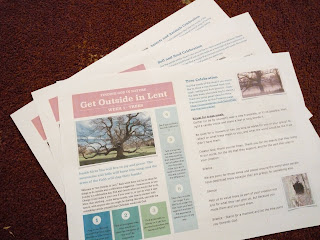

Christian environmental charity A Rocha has provided six weeks of ideas to get you and your family outside in Lent.  The PDF is here: https://bit.ly/ECGetOutsideforLent.  There are six activities each week (and yes, the first one really is "Hug a tree") and a suggestion for a celebration and prayer on Sundays.  

The logical way to do six weeks seems to be to start next Monday, but then the final Sunday is Easter Sunday.  So I guess you could also start today (or tomorrow) and finish on the Thursday before Easter.  There are no dates, making it pretty flexible.

Ashes to Rainbows: A Queer Lenten Devotional


Unbound, a Christian social justice journal, offers two series of devotions for Lent.  I'm reading the 2020 one, Ashes to Rainbows, written by LGBTQIA+ people of faith and allies.  The other is Disabling Lent: An Anti-Ableist Lenten Devotional.

Both include reflections for Ash Wednesday, each Sunday of Lent, and every day of Holy Week - so not a whole lot of reading until you get to the end.  I think these are likely to challenge some of my assumptions about faith, as I hear from different perspectives.


Are you doing, reading, or listening to anything new this Lent?  Let me know!

Comments

Popular posts from this blog

Mr White Watson of Bakewell

Once upon a time, back in 1795 or so, lived a man who was always asking questions.  The kind of questions like, "Why is glass transparent?" or "Why do fruit trees grow better in that place than in this place?" or "What does the earth look like underneath the surface?"  This last question was one that he was particularly interested in, and he went so far as to work out what the rock layers looked like where he lived, and draw little pictures of them.  Now he was a marble sculptor by trade (as well as fossil hunter, mineral seller, and a few other things) so he thought it would be even better to make his little pictures in stone.  That way he could represent the layers using the actual rocks they were composed of.  Over the course of his lifetime he made almost 100 of these tablets, as he called them. Then he died.  And no one else was quite as interested in all those rocks and minerals as he was.  His collection was sold off, bit by bit, and the table...

Baby Language

For some reason baby equipment is an area in which American English differs markedly from British English. As well as learning how to care for a baby, we had to learn a whole new vocabulary! Fortunately we are now fluently bilingual, and I have compiled a handy US-UK baby dictionary for you. Diaper n. Nappy Mom says if you can read this change my diaper. The first time you change one of these you will be all thumbs and stick the little adhesive tabs to yourself, the baby and probably the changing mat before you get them where they ought to go. A few years later you will be able to lasso a running toddler and change them before they even know what's happened (yes, I have seen it done). You will also get through more diapers than you ever thought possible, creating scary amounts of expense and waste. Hence we are now mostly using: Cloth diaper n. Reusable nappy Cool baby. No longer those terry squares, the main drawback is that there are now so many types it can be qu...

Speedy Steamed Pudding

One of the highlights of being in catered halls for a couple of years at university was the sponge puddings. Great big sheets of chocolate or vanilla sponge, carved into hefty blocks and doused with thick custard. The main courses were edible at best, but those puddings would fill you up for a week. Good solid puddings, whether baked, steamed or boiled, have been a mainstay of English cooking for centuries. Something about the cold, damp, dark winters inspired British cooks to endless variations on suet, jam, currants, custard and other comforting ingredients. Once I left the nurturing environs of my parents' house and university halls, pudding stopped being an everyday affair and became a more haphazard, if-I-feel-like-making-any event. And steamed puddings especially, with their two hours over simmering water, don't really lend themselves to spur of the moment dessert-making. However, technology has moved on since those first days of puddings. I'd been vaguely ...