I know halfway through Advent is a little late to be recommending things to listen to in Advent. But I had to listen to it before I could recommend it, didn't I? Anyway, even if you haven't got organized for the first half of Advent, there's nothing to stop you giving these a try for the second half.
The first recommendation is a book, but you can also listen to the author reading a chapter each day.
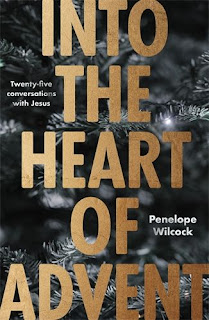
I can't remember where I picked up Penelope Wilcock's The Hawk and the Dove trilogy, but it came into my life from somewhere, and I enjoyed it. Then I discovered she has a blog, where she writes about simplicity, and living with less, and little anecdotes about her home and life. And then I bought Into the Heart of Advent, subtitled Twenty-five conversations with Jesus.
This book laps you with peace and tranquillity - the calm of a winter's morning, sitting by an open fire, standing out under the stars - yet it never lapses into sentimentality or wishful thinking. Jesus has opinions about Christmas cards: "'Stick with the robins,' he suggests. 'Those [nativity scenes] are awful.'" and electric tealights versus real candles: "It's always better not to set anybody on fire."
But the conversations include much deeper topics, like judgement, vulnerability and homelessness. At the end of one chapter, Penelope muses, "I can't figure out if he's just made this easier or twice as hard."
You probably won't want to buy the book at this point in December (unless for next year), but go and have a listen at Kindred of the Quiet Way. I recommend Chapter 3: What it means to be with us, if you just need ten minutes to be still and breathe.

I've mentioned the Lectio 365 app a few times before on this blog. Clearly I'm not the only one who finds it helpful, because they've expanded from morning prayer to evening prayer, and now a brand new app, Lectio for Families. It follows a similar format to the regular Lectio app, but the language is simpler and it includes a weekly memory verse. The boys have engaged with it really well, and it's been nice to stop and have a few moments of quiet, snuggled together on the sofa.
Lectio for Families launched at the beginning of Advent, but as far as I know, it is scheduled to continue. So you can start at the New Year, for Lent, or just dip in whenever you like.

Edit to add: I belatedly realised that this post needed some music, too. This is beautiful:
And I've just discovered Annie Lennox's Christmas Cornucopia album (only 11 years behind the times!). I particularly like God Rest Ye Merry Gentlemen:
Of course, we still have our Advent candle at dinner each day, with a verse from the Christmas story. And the chocolate Advent calendars from Grandma! Those are non-negotiable traditions.
It strikes me that my Advent reading and listening has emphasised quiet and stillness, this year. Jesus' comments about people being "harassed and helpless, like sheep without a shepherd" still feel true today, don't they? Peace seems hard to find, whether we are frantically arranging activities, cancelling them again, or stuck at home isolating.
May we all hear the voice of the true shepherd, and find rest in him this Advent.
Comments